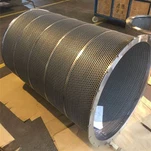
Common materials used for sintered metal filter elements include stainless steel, copper powder, titanium alloys, and nickel alloys. Each of these materials possesses distinct characteristics designed to meet the filtration requirements of various applications.
Stainless steel is a widely utilized material, with common grades including 304 and 316L. Among these, austenitic stainless steel is the most prevalent; rich in elements such as nickel, chromium, and molybdenum, it exhibits exceptional ductility, corrosion resistance, and strength, making it broadly applicable across numerous sectors. Ferritic stainless steel, conversely, contains virtually no nickel but features a higher chromium content and a low carbon concentration (typically not exceeding 0.1%); it is characterized by its resistance to stress cracking and corrosion, and is also magnetic. Martensitic stainless steel possesses a higher carbon content than its ferritic counterpart-approximately 1%-rendering it hardenable and endowing it with considerable strength; it is frequently employed in the manufacture of tooling and molds.
Duplex stainless steel combines the advantages of both austenitic and ferritic stainless steels, offering superior strength and exceptional corrosion resistance; it is commonly found in applications such as offshore oil drilling platforms and natural gas facilities. Precipitation-hardening stainless steel integrates the corrosion resistance of austenitic stainless steel with the potential for high hardness and strength inherent in martensitic stainless steel, though achieving this enhanced strength typically necessitates specific post-processing steps, such as heat treatment.
Filter elements fabricated from copper powder offer a diverse range of porosities, making them suitable for use with a variety of corrosive media. These copper powder filters are manufactured using carefully selected spherical tin-bronze powder; their variable porosity allows them to perform effectively in filtration scenarios involving a wide spectrum of corrosive substances.
Titanium alloy filter elements are produced using industrial-grade titanium powder as the raw material, which undergoes a series of processes-including sieving and sintering-to form the final product. They are distinguished by their extraordinary corrosion resistance, lightweight nature, and excellent biocompatibility; however, their high cost and the inherent difficulty involved in their processing limit their scope of application, confining their use primarily to high-end sectors such as marine engineering.
Filter elements manufactured from nickel alloys-such as Hastelloy and Inconel-demonstrate exceptional resistance to high temperatures and high pressures, in addition to possessing superior mechanical properties. Nevertheless, they face the same challenges of high cost and processing complexity, and are therefore predominantly deployed in extreme environments, such as those found in the petrochemical industry.
Each of these materials offers distinct advantages, providing reliable and effective solutions for a wide array of filtration requirements.