
Sintered Metal Powder Filter
Sintered Metal Powder Filter Elements: Precision Porous Metal Solutions for Extreme Operating Conditions
Sintered metal powder filter elements are rigid, self-supporting porous structures manufactured through cold isostatic pressing or axial compaction followed by high-temperature vacuum sintering. By controlling metal powder particle size, shape, and sintering parameters, these filters yield uniform pore distributions with high mechanical strength.
Unlike flexible wire mesh or fiber felts, porous sintered powder media withstand high differential pressure without media deformation or pleat collapse. Engineered for aggressive chemical clarification, catalyst recovery, continuous steam filtration, and gas sparging, our sintered metal powder filters operate reliably in environments where polymeric, paper, or textile media fail. They serve as direct drop-in replacements for standard OEM porous metal cartridges.
-
 Sintered Metal Powder CartridgeProduct Name: Sintered Metal Powder Cartridge, SS sintered powder filter elementMaterial: Standard SS316L, Titanium, or customized according to requirmentFilter Micron: 0.22um-100µmSize: diameterAdd to Inquiry
-
 Sintered Metal Powder DiskProduct Name: Sintered metal powder disk, Sintered porous filter Material: Standard SS316L, TitaniumFilter Micron: 0.22um-100µmShape and size: round shape maximum diameter 300mm, square shape maximumAdd to Inquiry
-
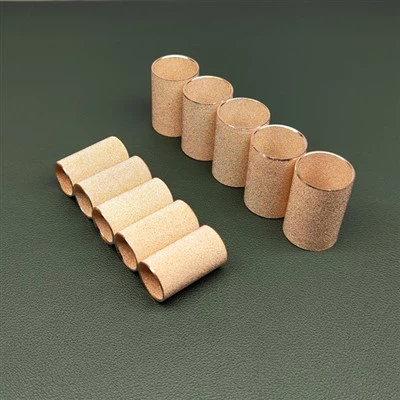 Sintered Porous Bronze FilterProduct Name: Sintered porous bronze filter, Sintered copper porous filterMaterial: bronze, copperFilter Micron: 0.5um-120µmShapes: Disc, Cup, Cartridge, Pannel or customized other specialAdd to Inquiry
-
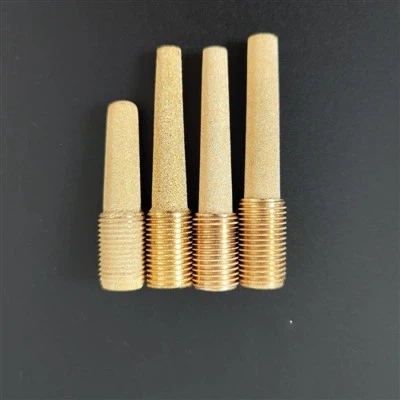 Sintered Bronze MufflerProduct Name: Sintered bronze muffler, Sintered bronze powder mufflerMaterial: bronze powder, copper powderFilter Micron: 0.1um-300µmShapes: sound-absorbing panels, sound-absorbing inserts,Add to Inquiry


Type & Specifications
|
Parameter |
Standard Specification Range |
|
Filtration Rating |
0.2 micron to 100 micron (Bubble Point verified per ISO 4003) |
|
Porosity |
30% to 50% |
|
Standard Materials |
316L Stainless Steel, Titanium Grade 1, Hastelloy C-276, Inconel 600, Monel 400, Nickel 200 |
|
Seamless Porous Tube OD |
10 mm to 100 mm (Custom diameters available up to 300 mm) |
|
Maximum Tube Length |
Up to 1200 mm seamless; longer lengths achieved via orbital TIG welding |
|
Porous Disc Diameter |
5 mm to 500 mm |
|
Thickness Range |
1.0 mm to 10.0 mm |
|
Connection Interfaces |
Threaded (NPT, BSP, M20x1.5), DOE (Double Open End), Code 7, Flanged, Custom CNC Adapters |
Material & Filtration Performance
Structural Rigidity & High Pressure Resistance
Sintered powder structures exhibit high hoop strength and compressive modulus. Standard elements withstand differential pressures exceeding 10 bar to 20 bar in normal flow direction, with specialized heavy-wall configurations rated up to 80 bar without media migration or deformation.
Uniform Pore Geometry & Sharp Cut-Off
Controlled powder classification produces narrow pore size distribution curves. This ensures predictable retention efficiency and prevents off-spec particle bypass during pressure surges or flow fluctuations.
Powder Integrity & Solid-State Diffusion Bonding
Vacuum sintering at temperatures up to 1250 degrees C creates solid-state metallurgical bonds at all powder contact points. This bond structure prevents powder shedding and particle release into downstream filtrate.
Thermal Stability & Corrosion Resistance
- 316L Stainless Steel: Standard choice for general industrial steam, solvents, and neutral liquid filtration up to 400 degrees C in oxidizing atmospheres.
- Titanium Grade 1: Ideal for wet chlorine, hypochlorite solutions, seawater, and nitric acid processing where stainless steels suffer pitting or stress corrosion cracking.
- Hastelloy C-276 / Inconel 600: Selected for hot concentrated mineral acids, strong alkaline solutions, and high-temperature gas processing up to 600 degrees C.
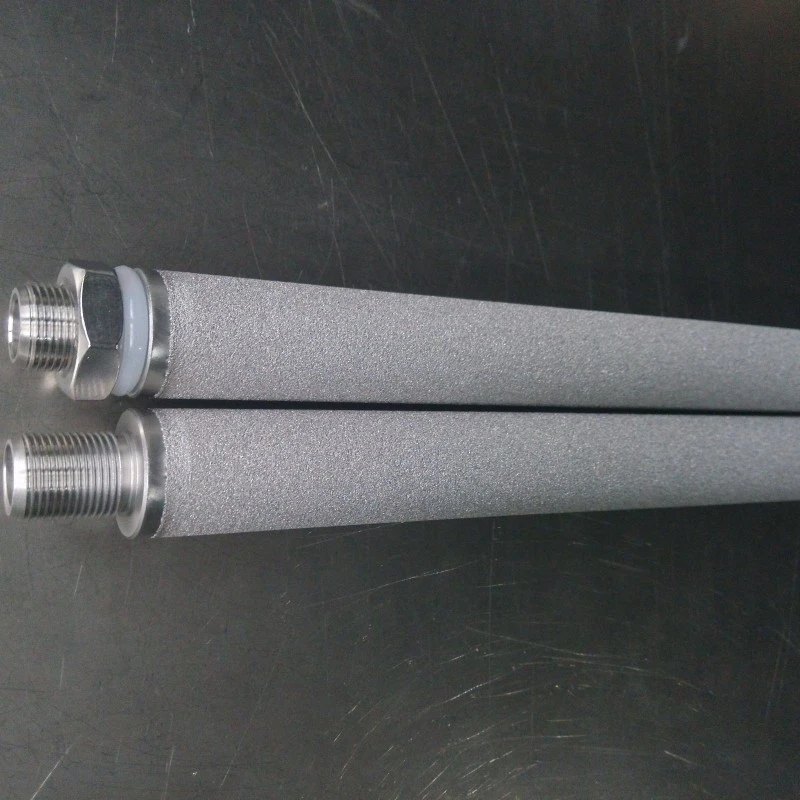
Catalyst Retention & Recovery: Recovery of precious metal catalysts (such as Raney Nickel, Palladium, Platinum on Carbon) from hydrogenation reactors and fine chemical processes.
High-Temperature Steam & Gas Filtration: Removal of particulate matter from culinary steam, process steam, and hot gas streams in petrochemical plants and pharmaceutical facilities.
Gas Sparging & Aeration: Injecting precise micro-bubbles of gas (oxygen, nitrogen, ozone, carbon dioxide) into liquids for fermentation, water treatment, and beverage carbonation.
Polymer Melt & Viscous Fluid Clarification: Final polishing of high-viscosity resins, monomers, and polymers before processing.
Vent & Breather Filters: Protecting storage tanks, reactors, and sterile enclosures from atmospheric particulate contamination.
★Process Medium & Fluid Chemistry: Determines the alloy selection (316L vs Titanium vs Hastelloy) to prevent chemical attack or ion leaching.
★Flow Rate & Allowable Differential Pressure: Higher flow rates require larger total surface area or increased porosity to maintain initial pressure drop (Delta P) within operating limits.
★Target Micron Rating & Efficiency:Match the required particle retention threshold (for example, 0.5 micron for catalyst retention vs 10 micron for steam filtering).
★Physical Dimensions & Interface Geometry:
- Seamless Porous Cartridges: Best for backwash cleaning cycles and high-pressure housings.
- Porous Discs / Plates: Suitable for nutsche filters, Buchner funnel inserts, and fluid beds.
- Sparger Tubes: Designed with specific pore sizes to control bubble diameter during gas dispersion.

Manufacturing & Quality Control
Manufacturing Flow
Raw Metal Powder Inspection -> Precision Powder Blending & Compaction -> High-Vacuum / Hydrogen Atmosphere Sintering -> CNC Interface Machining & Orbital TIG Welding -> Bubble Point & Permeability Testing -> Ultrasonic Solvent Cleaning & Cleanroom Packaging
Quality Control & Inspection Protocols
Material Verification: Positive Material Identification (PMI) and chemical composition analysis on incoming powder batches.
Pore Size & Permeability Testing: Bubble point pressure testing per ISO 4003 and air/water permeability verification per ISO 4022.
Weld Joint Integrity: Automated TIG/Plasma welding with 100% helium leak testing or bubble leak inspection to ensure zero bypass at adapter connections.
Material Traceability: Full EN 10204 3.1 Material Test Reports (MTR) provided with chemical composition and physical properties.
OEM & Customization Capabilities
Print-to-Part Custom Fabrication
Machining custom end fittings, threaded connectors, and mounting flanges to match client equipment drawings.
Drop-In Replacement Elements
Direct dimensional and performance matching for standard industry cartridges (such as Mott, GKN, or Pall equivalents).
Surface Modifications & Coatings
Specialized passivation, electropolishing, or surface treatments to minimize bio-fouling or chemical adhesion.
Prototype Development
Fast turnaround on small batch samples for pilot plant testing and laboratory validation.
FAQ
As one of the leading sintered metal powder filter manufacturers and suppliers in China, we offer a wide range of products with superior quality. Please rest assured to buy advanced sintered metal powder filter from our factory. We also accept customized orders.
SS sintered powder filter element, Sintered Bronze Muffler, sintered metal powder filter