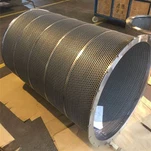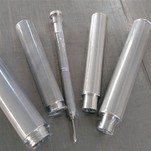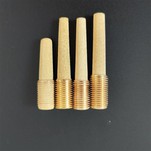
The operating principle of a sintered mesh filter cartridge is primarily based on the structure of its multi-layer sintered metal mesh and its physical filtration mechanisms, achieving impurity separation through processes such as interception and depth filtration. Specifically, the process unfolds as follows:
Interception Mechanism
Constructed by stacking and compressing multiple layers of stainless steel wire mesh, the overlapping apertures form a uniform filtration structure. As fluid passes through, particles larger than the mesh pore size are directly intercepted on the surface of the filter element, thereby achieving preliminary filtration.
Depth Filtration Mechanism
Particles smaller than the mesh pore size enter the interior of the filter element along with the fluid. Due to the complex and tortuous nature of the porous structure, these particles undergo continuous collisions and friction while in motion; they are ultimately captured and retained within the interior of the filter element, completing the depth filtration process.
Material Properties Ensuring Performance
Fabricated using high-temperature composite sintering of stainless steel or specialized metal powders, the filter elements feature high mechanical strength, excellent corrosion resistance, and superior permeability.
Certain filter elements are enhanced with adsorbent materials-such as activated carbon-to further adsorb harmful substances, including organic compounds and residual chlorine.
Advantages in Structural Stability
Benefiting from high-temperature sintering treatment, the filter elements possess high mechanical strength, enabling them to withstand specific levels of pressure and mechanical shock, thereby ensuring stable and consistent filtration performance.
Summary: Sintered mesh filter cartridges achieve both physical interception and depth filtration through their multi-layer metal mesh structure. By combining these structural advantages with specific material properties and a robust design, they are ideally suited for the purification of liquids and gases-effectively removing particulate matter, microorganisms, and harmful substances.