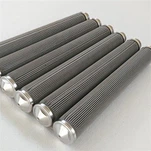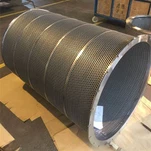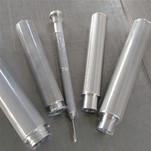
There are several key differences between high-flow and low-flow filter cartridges, including the following aspects:
1. Filtration capacity: High-flow filter cartridges are typically designed to handle larger volumes of liquid or gas flow; therefore, they have a greater filtration capacity. Low-flow filter cartridges, conversely, are suitable for handling smaller flow rates.
2. Size and Construction: High-flow filter cartridges are generally larger in physical size and have a larger surface area to accommodate a larger volume of filtration media. In contrast, low-flow filter cartridges tend to be more compact and smaller in dimension.
3. Filtration efficiency: While filtration efficiency ultimately depends on the specific design and materials of the cartridge, high-flow cartridges generally exhibit higher filtration efficiency. This is because they can contain a larger amount of filtration media, allowing them to trap particles and contaminants more effectively.
4. Areas of application: High-flow filter cartridges are typically used in industrial and commercial environments, such as water treatment plants, large-scale machinery, and manufacturing lines. Low-flow filter cartridges are more commonly found in residential and small-scale applications, such as faucets, coolers, and home water filtration systems.
5. Replacement Frequency: Because high-flow filter cartridges contain a larger volume of filter media, they tend to have a longer lifespan and require less frequent replacement. Conversely, low-flow filter cartridges generally require more frequent replacement due to their limited capacity.
6. Cost: Generally speaking, high-flow filter cartridges for higher cost as they usually require more materials and involve more complex engineering design. Low-flow filter cartridges, on the other hand, tend to be more economical.
In summary, both high-flow and low-flow filter patterns have their own advantages and suitable applications; choosing the appropriate filter pattern depends on the specific application requirements and flow rate requirements.