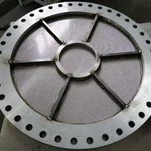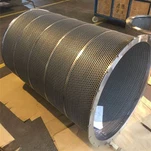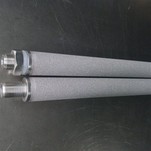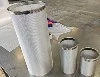
The primary function of sintered metal filter elements is to remove suspended particles from liquids and gases, thereby enhancing process purity and safety. Compared to traditional filtration devices, sintered metal filter elements demonstrate superior performance in terms of filtration efficiency, heat resistance, and corrosion resistance, enabling them to operate reliably under harsh conditions.
1. Specific Applications and Advantages
High Filtration Efficiency: Utilizing metal sintering technology to create a porous structure, these filter elements allow for precise control over pore size, effectively filtering particles of various dimensions.
Exceptional Heat and Corrosion Resistance: Manufactured using high-quality alloy materials, they maintain structural integrity under high temperatures and severe operating conditions, resisting acid and alkali corrosion to extend equipment service life.
Easy Cleaning and Regeneration: Their unique physical structure facilitates the easy removal of accumulated contaminants-typically via backwashing or air purging-enabling the filter elements to be reused repeatedly and thereby reducing operational costs.
Broad Applicability: Suitable for a wide range of industries-including petrochemicals, food and beverages, pharmaceuticals, and water treatment-meeting diverse filtration requirements across various sectors.
2. Manufacturing Process and Material Characteristics
Sintered metal filter elements are produced by compacting metal powders into a specific shape through a high-temperature sintering process, followed by precision machining. This manufacturing process endows the filter elements with exceptional strength and abrasion resistance, ensuring a uniform and dense internal structure capable of precisely capturing even the finest particulate matter.