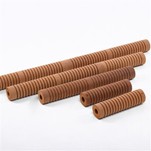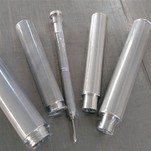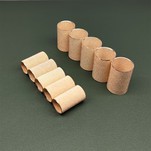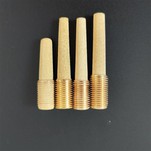
Sintered mesh filter elements are high-performance, versatile industrial filtration components. They are constructed from multiple layers of metal wire mesh-typically stainless steel (such as 304, 316L, etc.)-arranged in a specialized layered design and fused together through a high-temperature, high-pressure sintering process. This process creates a rigid, integral filtration unit characterized by a gradient pore structure.
Benefiting from their unique structural and material properties, the primary uses and application fields of sintered mesh filter elements include:
1. High-Precision, High-Reliability Filtration:
Hydraulic and Lubrication Oil Systems: Protects precision hydraulic components (such as pumps, valves, and servo valves) from particulate contamination, thereby extending equipment lifespan and ensuring stable system operation. These elements are commonly used as filters in high-pressure hydraulic systems.
Fuel Systems: Used for fuel filtration in engines, gas turbines, and similar machinery to remove moisture and particulate impurities.
Process Fluid Filtration: Employed in the process streams of chemical, petrochemical, pharmaceutical, and food & beverage industries to filter various solvents, chemical reagents, additives, and catalysts, thereby ensuring product quality and process safety.
Gas Filtration: Provides precision filtration for compressed air, inert gases (such as nitrogen and argon), process gases, and similar media, removing oil mist, moisture, and solid particulates to protect downstream equipment and instrumentation.
Water Treatment: Used in applications such as reverse osmosis pretreatment, ultrafiltration/microfiltration guard filtration, and final precision filtration.
2. Filtration in High-Temperature and High-Pressure Environments:
The sintered metal mesh itself possesses inherent high-temperature resistance (reaching several hundred degrees Celsius, depending on the specific material-e.g., stainless steel) and high structural strength, making it resistant to deformation. It is particularly well-suited for demanding operating conditions involving high-temperature oils, heat transfer fluids, steam condensates, and high-pressure hydraulic systems.
3. Corrosion-Resistant and Chemically Aggressive Environments:
Sintered mesh filter elements manufactured from stainless steel (particularly 316L) or specialized alloys exhibit excellent corrosion resistance. They are suitable for filtering corrosive media, such as strong acids, strong bases, and various solvents.
4. Applications requiring high strength and impact resistance:
Sintered mesh filter elements feature a rigid, integral structure and exceptional mechanical strength, enabling them to withstand high differential pressures, frequent pulse backflushing, and moderate mechanical shock without sustaining damage. They are ideal for environments characterized by significant operational fluctuations, frequent pressure changes, or the need for vigorous backflushing for regeneration (e.g., in self-cleaning filters).
5. Sanitary-grade applications in food, pharmaceuticals, and bioengineering:
Constructed from materials that meet sanitary standards-such as 316L stainless steel-these elements feature smooth surfaces free of dead zones, allowing for thorough and easy cleaning (via CIP/SIP) and meeting the stringent sanitary requirements of standards such as GMP and FDA. They are utilized for the precision filtration of pharmaceutical liquids, sterile air, fermentation broths, beverages, dairy products, and similar substances, as well as for pre-filtration prior to sterilization filtration.
6. Silencers/Mufflers:
Their porous structure effectively disperses airflow and attenuates noise; they are commonly employed for noise reduction at the exhaust ports of air compressors, pneumatic components, and similar equipment.
7. Gas Distribution and Diffusion:
In equipment such as chemical reactors, fluidized beds, and burners, sintered mesh plates or filter elements are frequently used to ensure the uniform distribution of gases (e.g., air, oxygen, inert gases).
8. Catalyst Carriers:
Their high specific surface area and excellent gas permeability allow them to serve as robust support frameworks for catalysts.
Summary of the Core Advantages and Application Value of Sintered Mesh Filter Elements:
High Filtration Precision: Capable of achieving absolute filtration precision ranging from the micron level (e.g., 1μm, 5μm, 10μm, 25μm) up to tens of microns or coarser grades.
High Strength and Rigidity: Resistant to high pressure and mechanical shock; highly resistant to deformation or cracking.
Excellent Thermal Stability: Suitable for use with high-temperature fluids and gases.
Good Chemical Compatibility: Particularly when constructed from stainless steel, they exhibit strong corrosion resistance.
Easy to Clean and Regenerate: Flow rates can be effectively restored through methods such as back-blowing, backflushing, ultrasonic cleaning, or chemical cleaning, ensuring a long service life.
No Media Shedding: Formed via integral sintering, the filtration layer remains stable and does not shed fibers or particles that could contaminate downstream processes.
Highly Versatile Structural Design: The structure can be fabricated in various shapes (cylindrical, disc-shaped, or plate-like) and dimensions to suit specific requirements. Furthermore, it can be engineered with a gradient pore structure-featuring a dense outer layer and a coarser inner layer-to facilitate deep filtration and achieve high dirt-holding capacity.
Consequently, the primary application of sintered mesh filter elements is to serve as critical filtration components in precision filtration scenarios that demand high reliability, resilience against harsh operating conditions (such as high temperatures, high pressures, and corrosive environments), and the need for both extended service life and regenerability.